
Art with a story
Intentionally handmade paper for delicately handmade art
The Paper
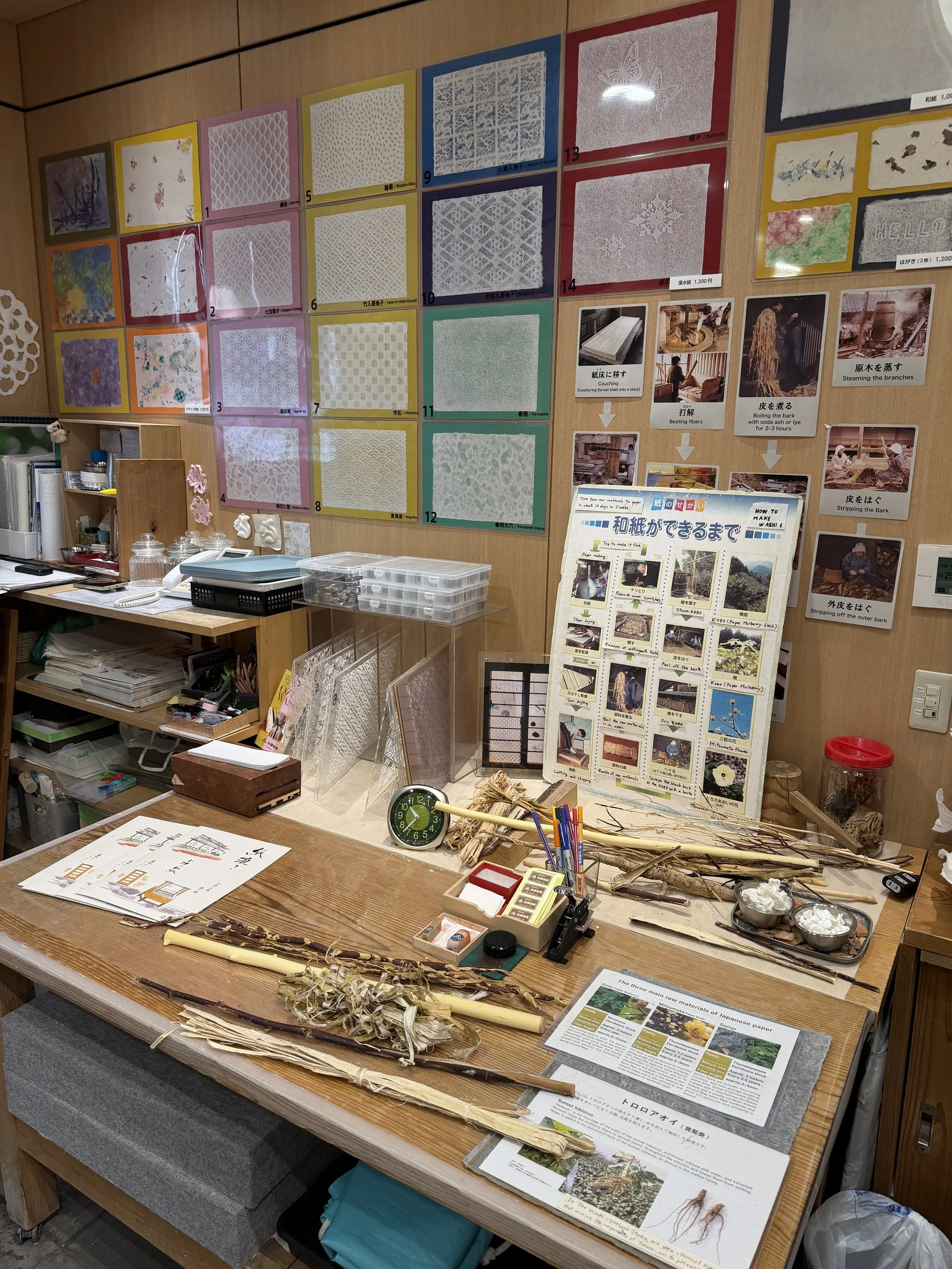
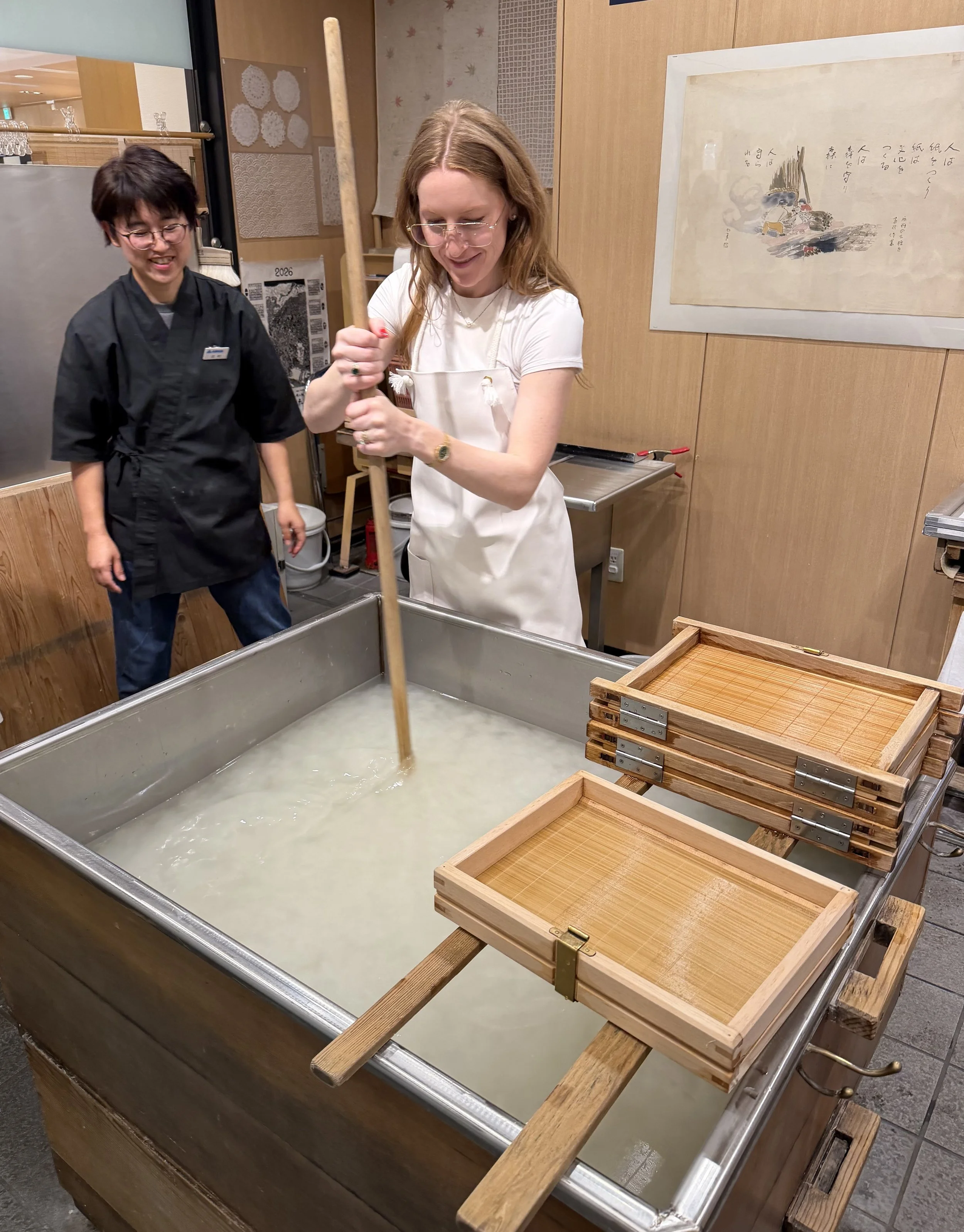
Washi paper is handmade from the bark of the mulberry tree, a tradition that has been practiced in Japan for centuries, dating back to the 700s. While in Japan this spring, I had the opportunity to visit a washi paper shop and experience part of the paper-making process firsthand. There are so many steps that go into creating each sheet—steaming, peeling, drying, scraping, boiling, and more—before the individual sheets are even formed. Once formed and dried, the papers are dyed into beautiful colors, each with its own subtle variations in color, texture, and character. Given this handmade process, no two sheets are exactly the same, which is part of what makes working with washi so special to me.
The Legacy
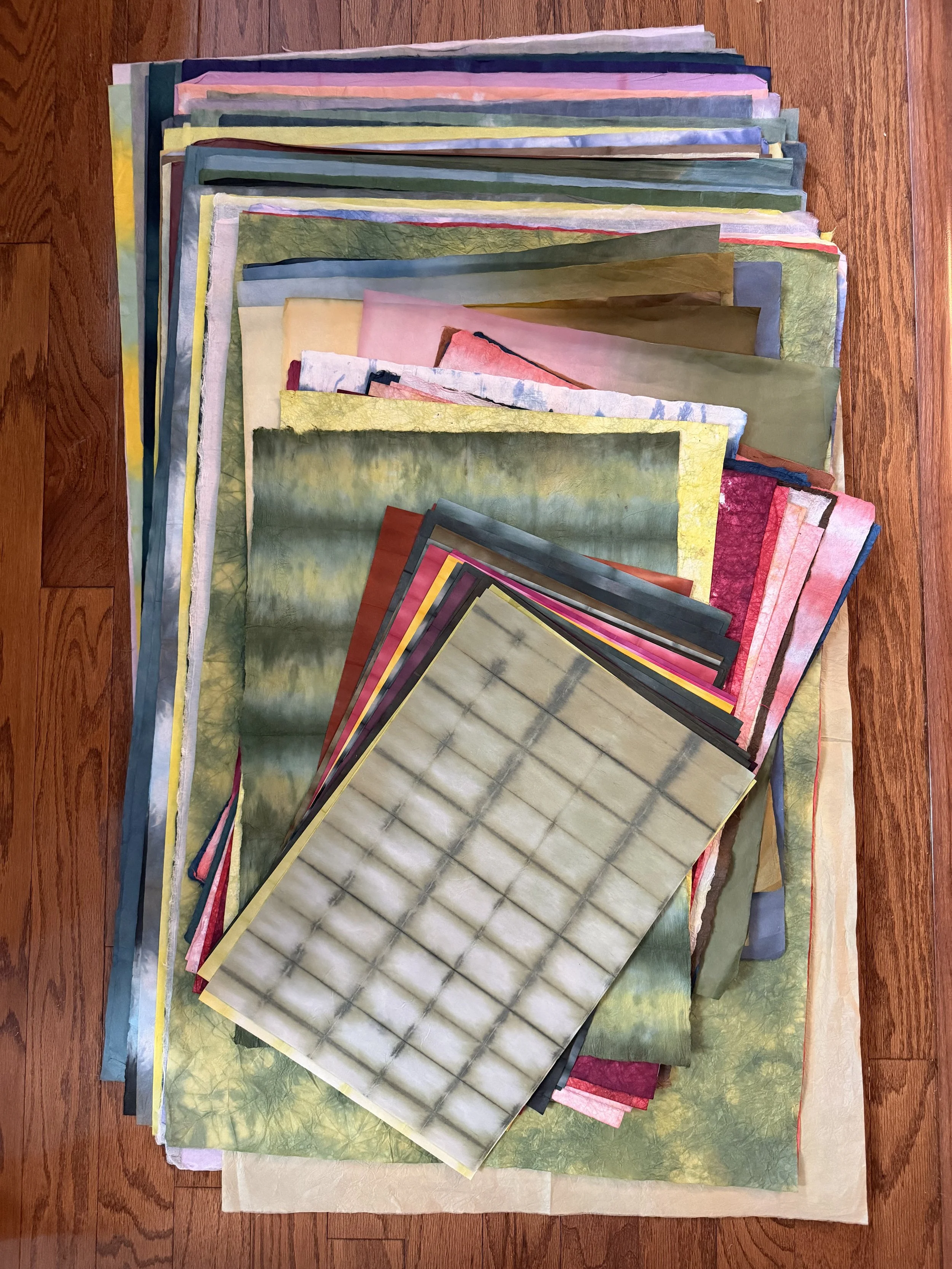
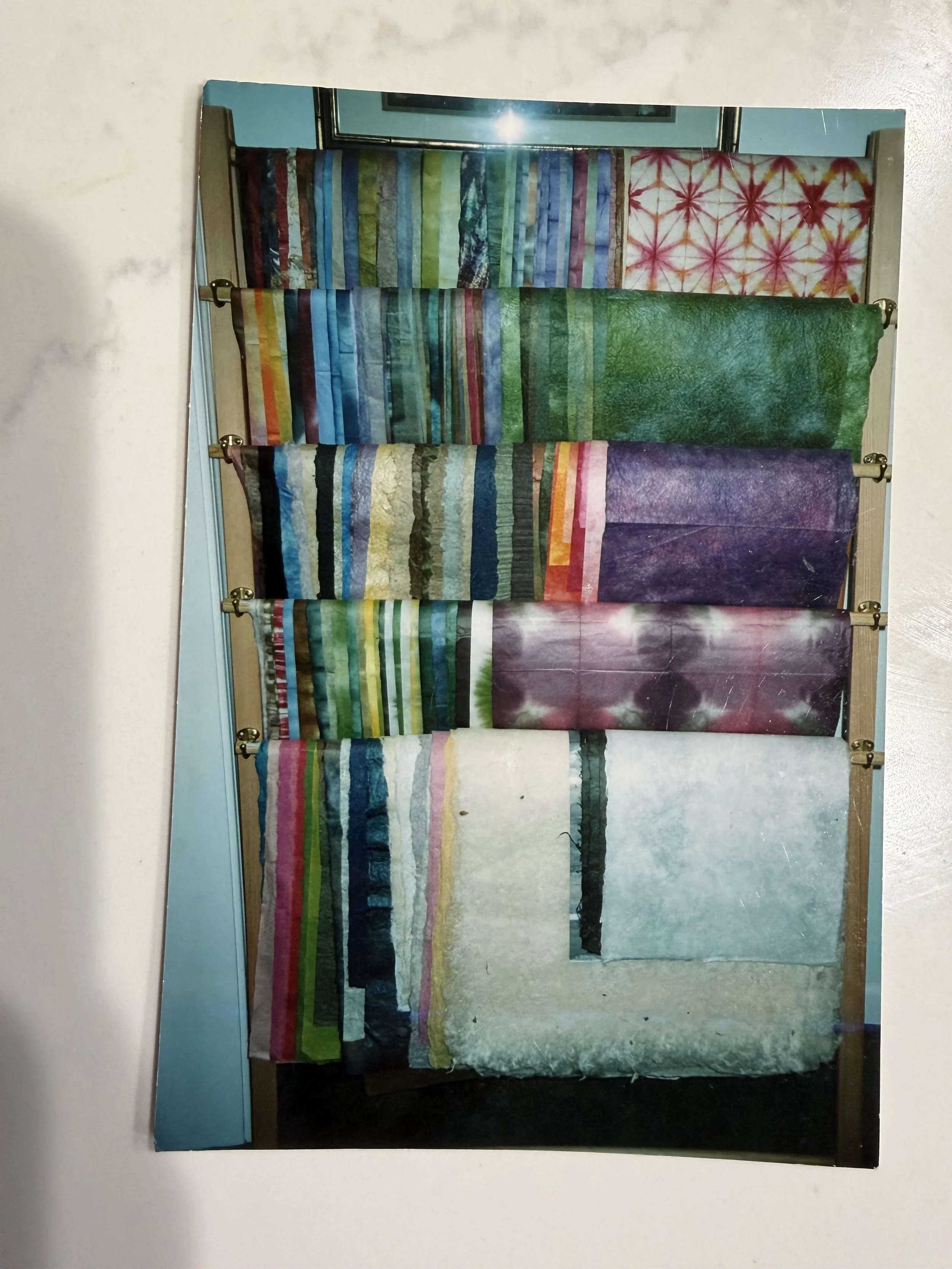
My connection to chigiri-e began with my grandmother, who learned the art while living in Japan and spent many years as a chigiri-e artist, building a personal collection of handmade washi. She eventually taught me the art as a child, passing along not only the technique, but a love for the materials and the stories behind them. Today, many of the papers I work with come from her collection, making each piece a continuation of something she began long before me.
My grandmother had a vast collection, which you can see on the left above. I began my personal collection, pictured right, when I visited Japan this spring. Every sheet has its own unique texture, coloring, and character, and it’s a special part of the process to select which paper to use for each piece.
The process
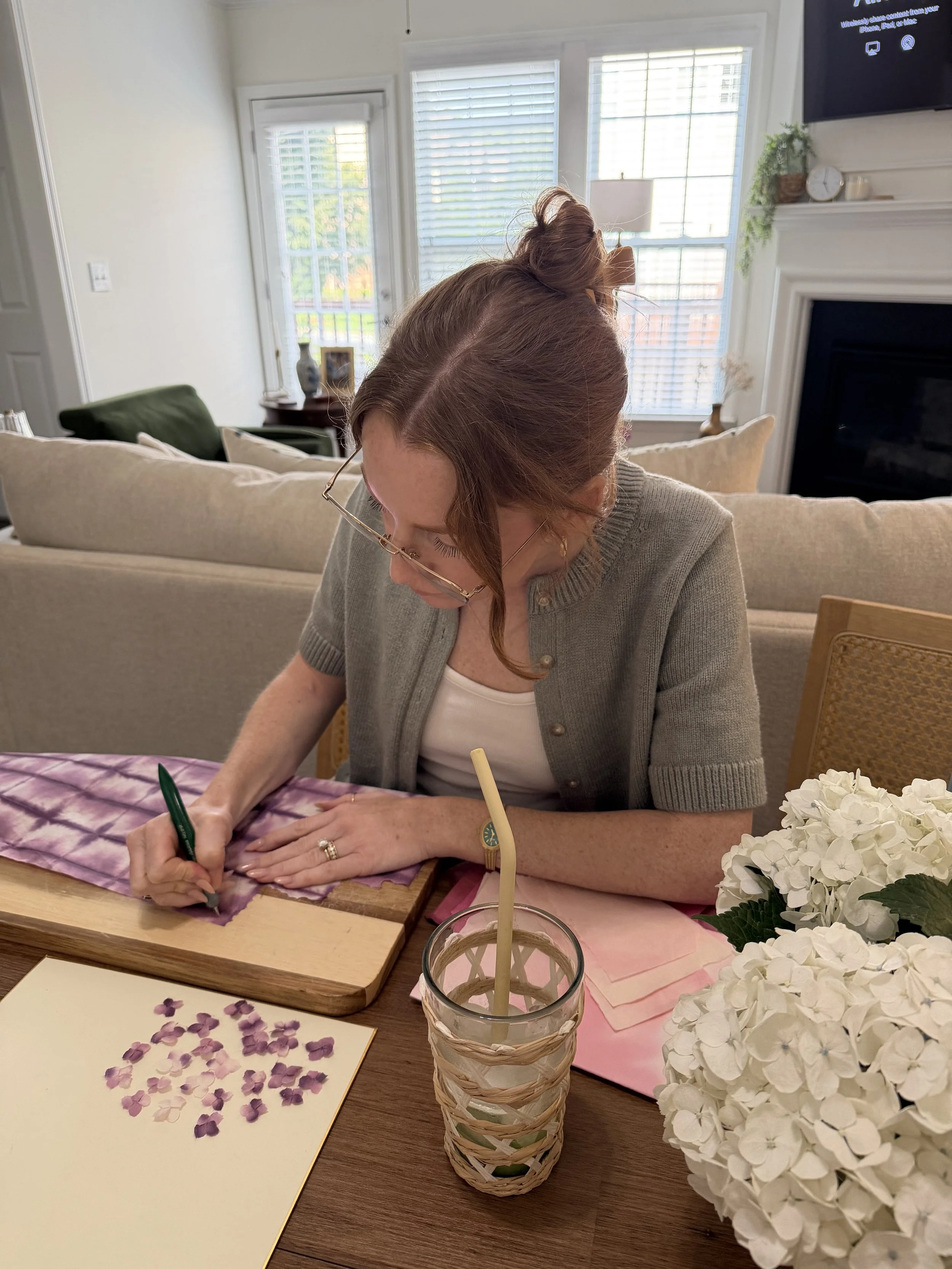
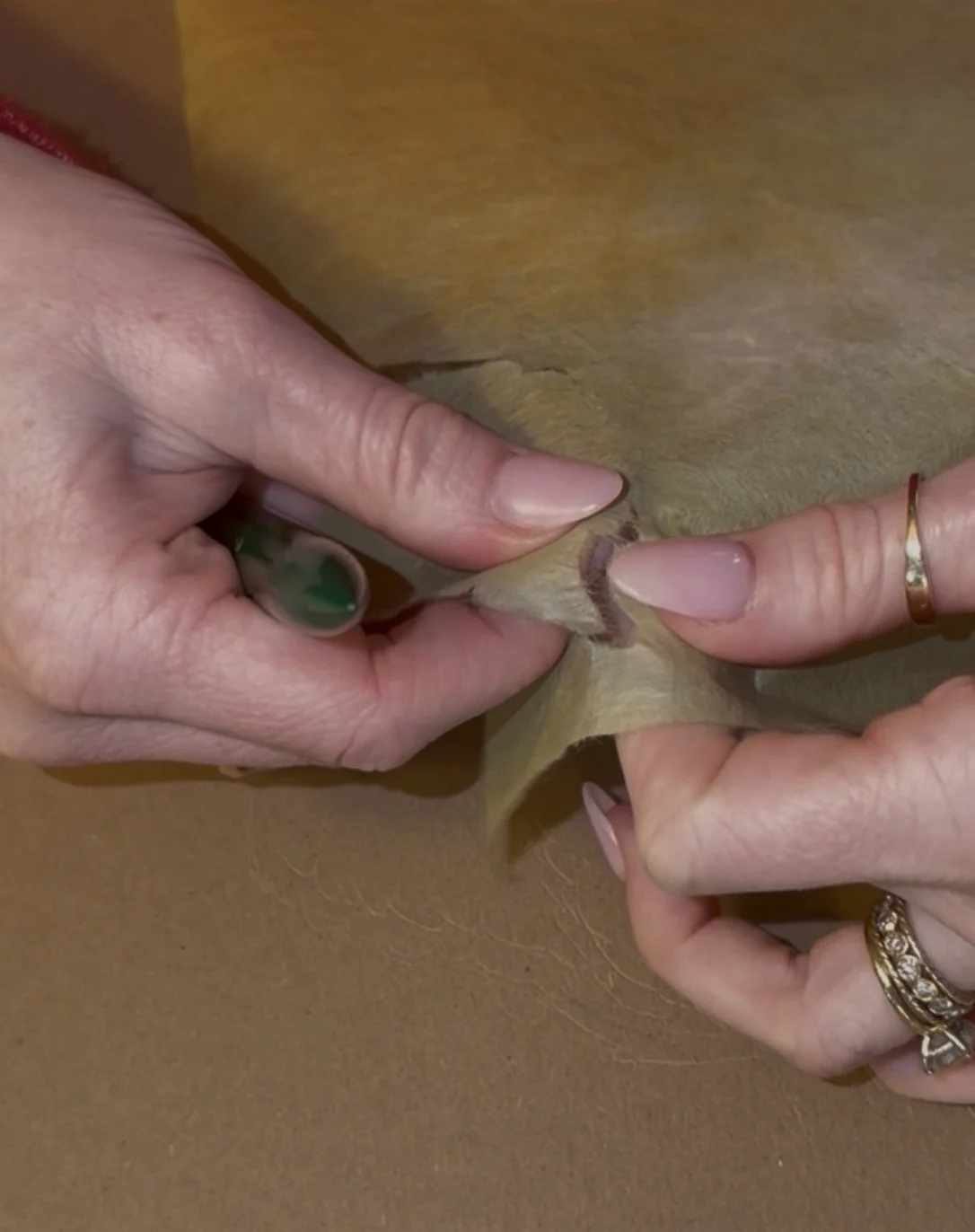
Each piece begins with an idea, intentionally selecting the paper, and incorporating watercolor. Rather than cutting the paper, I carefully outline, then tear and shape each piece by hand, allowing the natural edges and textures of the washi to become part of the design. I build the piece slowly and delicately, layer by layer, until the finished piece comes together.